




Fermier Products
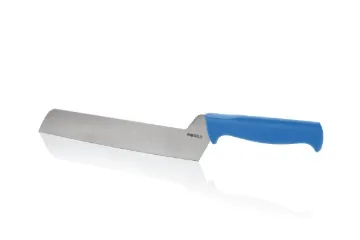
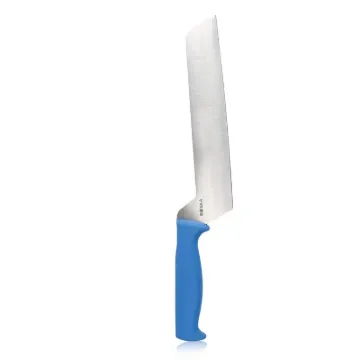
Knife for semi-hard cheese blue handle 210mm
HACCP rules state that each type of cheese should be cut with a separate knife.
That is why Boska has developed 3 types of cheese knives with colored handles, in order to avoid cross-contamination.
Complicated?
Of course not: red is for red bacteria cheeses, white is for white moldy cheeses, and blue is for blue cheese.
This knife has a raised handle so that your cutting hand stays clear of the cutting board.
It is also suitable for larger cheeses like Brie and Raclette.
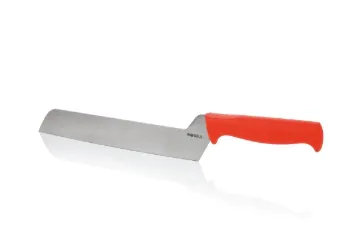
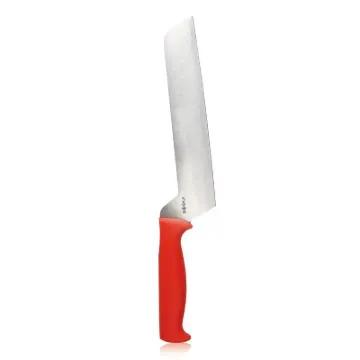
Knife for semi-hard cheese red handle 210mm
HACCP rules state that each type of cheese should be cut with a separate knife.
That is why Boska has developed 3 types of cheese knives with colored handles, in order to avoid cross-contamination.
Complicated?
Of course not: red is for red bacteria cheeses, white is for white moldy cheeses, and blue is for blue cheese.
This knife has a raised handle so that your cutting hand stays clear of the cutting board.
It is also suitable for larger cheeses like Brie and Raclette.
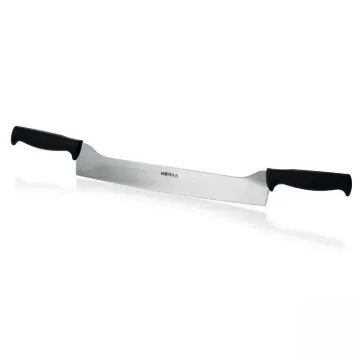
Straight knife 330mm
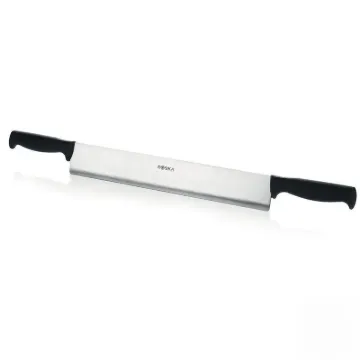
Straight knife 360 mm
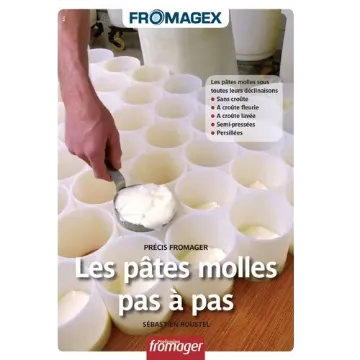
Les p tes molles pas pas
This guide offers, in a precise, detailed, and accessible manner, step-by-step instructions for the main types of cheese that fall within this category.
Cheese technologist and educator with expertise in both the artisanal and industrial sectors, the author offers his understanding of the principles and his practical knowledge to the reader, taking care to offer detailed information about equipment, tools, and other requirements for successful cheesemaking.
He also lays out, step-by-step, optional adaptations to the cheesemaking process.
Author: S bastien Roustel is a cheesemaking technologist.
172 pages
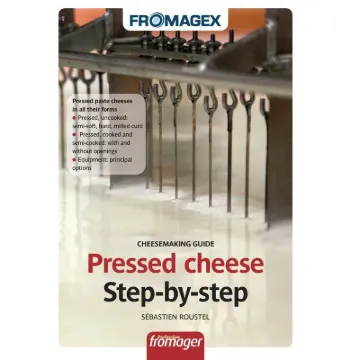
Pressed cheese step-by-step. Profession Fromager. 196p.
This practical guide offers, in very concrete terms, recipes for a dozen iconic cheeses from this large family: Tomme grise, Trappist, Raclette, Cheddar, Gruy re style
Cheesemaking technologist and instructor by profession, equally expert in the artisanal and industrial arenas, the author describes the precise steps to follow for each style, with adaptations and options throughout the process, including how to resolve occasional problems, while also including different configurations possible for equipment and tools.
Author: S bastien Roustel is a cheese technology expert at CHR-Hansen. Prior to this, he directed the research and development service at the Enilbio at Poligny. He also wrote the guide Soft Paste Cheese, Step-by-Step , published in this same collection.
196 pages
Le guide de l'affinage
So many questions which this practical guide aims to answer.
One of a kind, sometimes reference technical work and sometimes fieldwork, this guide provides concrete and pragmatic answers for all the big cheese families.
Written in simple language and accessible, it thus alternates general scientific knowledge, practical tips, implementation diagrams, testimonials from professionals, diagnostics, and defect resolution sheets... To those who want to embark on ripening, it will give the keys to understanding and reaction. To those who already practice this art where the sense of the observation is preponderant, it will bring new insights and will allow them to perfect their practice.
Authors:
Arnaud Sperat-Czar is the publisher and editor-in-chief of the magazine ?Profession Fromager? .
S bastien Roustel, technologist and trainer, is in charge of development of cheese technology at CHR-Hansen. He was previously the head of the Research and Development Department of Enilbio in Poligny.
D bora Pereira is a journalist, a researcher in information sciences, and collaborator of ?Profession Fromager . She runs the association Sertaobras , which works to promote the Brazilian cheese heritage.
The book benefited from the advice and careful reading of Bernard Mietton, renowned French technologist.
172 pages
Soft cheese step-by-step
This guide offers, in a precise, detailed, and accessible manner, step-by-step instructions for the main types of cheese that fall within this category.
Cheese technologist and educator with expertise in both the artisanal and industrial sectors, the author offers his understanding of the principles and his practical knowledge to the reader, taking care to offer detailed information about equipment, tools, and other requirements for successful cheesemaking.
He also lays out, step-by-step, optional adaptations to the cheesemaking process.
Author: S bastien Roustel is a cheesemaking technologist.
172 pages
Les p tes press es pas pas
This practical guide offers, in very concrete terms, recipes for a dozen iconic cheeses from this large family: Tomme grise, Trappist, Raclette, Cheddar, Gruy re style
Cheesemaking technologist and instructor by profession, equally expert in the artisanal and industrial arenas, the author describes the precise steps to follow for each style, with adaptations and options throughout the process, including how to resolve occasional problems, while also including different configurations possible for equipment and tools.
Author: S bastien Roustel is a cheese technology expert at CHR-Hansen. Prior to this, he directed the research and development service at the Enilbio at Poligny. He also wrote the guide Soft Paste Cheese, Step-by-Step , published in this same collection.
196 pages
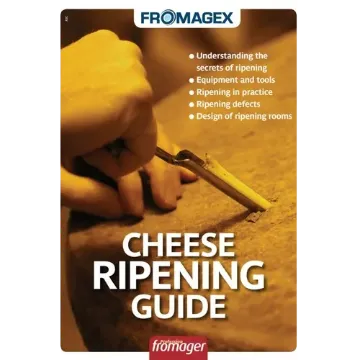
Cheese ripening guide
So many questions which this practical guide aims to answer.
One of a kind, sometimes reference technical work and sometimes fieldwork, this guide provides concrete and pragmatic answers for all the big cheese families.
Written in simple language and accessible, it thus alternates general scientific knowledge, practical tips, implementation diagrams, testimonials from professionals, diagnostics, and defect resolution sheets... To those who want to embark on ripening, it will give the keys to understanding and reaction. To those who already practice this art where the sense of the observation is preponderant, it will bring new insights and will allow them to perfect their practice.
Authors:
Arnaud Sperat-Czar is the publisher and editor-in-chief of the magazine ?Profession Fromager? .
S bastien Roustel, technologist and trainer, is in charge of development of cheese technology at CHR-Hansen. He was previously the head of the Research and Development Department of Enilbio in Poligny.
D bora Pereira is a journalist, a researcher in information sciences, and collaborator of ?Profession Fromager . She runs the association Sertaobras , which works to promote the Brazilian cheese heritage.
The book benefited from the advice and careful reading of Bernard Mietton, renowned French technologist.
172 pages


Portable pH Meter for dairy with a electrode
The HI99161 is a Foodcare portable pH and temperature meter designed specifically for dairy applications. Monitoring pH in dairy processes is critical to ensuring the quality of dairy products. The FC2023 pH electrode features a rugged, easy-to-clean PVDF body with a conical tip, making it ideal for measurements in semi-solid products such as meats and cheeses. The FC2023 uses a free-diffusion sleeve-type reference junction, which helps prevent the typical clogging problems associated with viscous liquids such as milk and condiments.
- Automatic Temperature Compensation
- Automatic Two-Point Calibration
- Waterproof
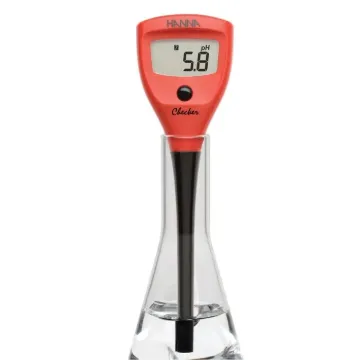
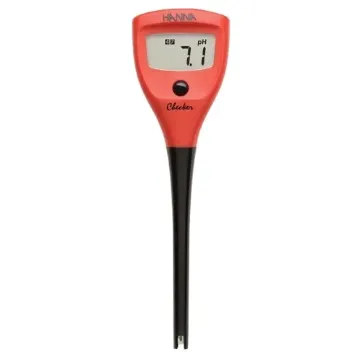
Checker® pH Tester
This is the next generation of the original Hanna Checker pH tester. Since its introduction in 1991, more than one million Checker meters have been used worldwide, making it one of the most popular pH meters available. From students to researchers, the Checker provides a simple and reliable solution for pH measurement.
- Simple one-button operation.
- Replaceable pH electrode.
- Accuracy: ±0.2 pH.
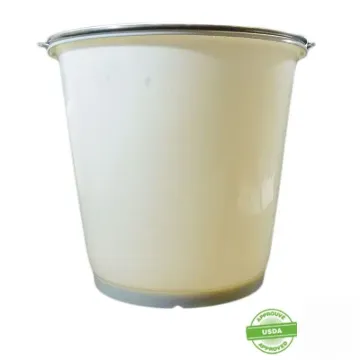
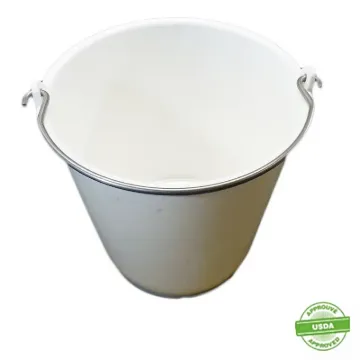
22L heavy duty round pail graduated with SS handle
The compliant graduated food-grade extra strong bucket with a stainless steel handle is designed for transporting liquids, food products, and a variety of ingredients.
The wear band on the bottom protects the base of the bucket, provides enhanced stability, and ensures a secure grip when pouring.
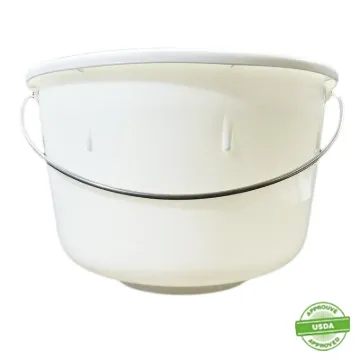
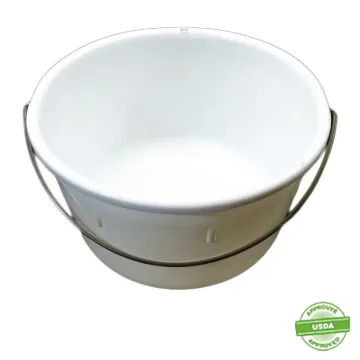
15L graduated low pail with stainless steel handle
The compliant graduated food-grade low bucket with a stainless steel handle is designed for transporting liquids, food products, and a variety of ingredients.
The wear band on the bottom protects the base of the bucket, provides enhanced stability, and ensures a secure grip when pouring.
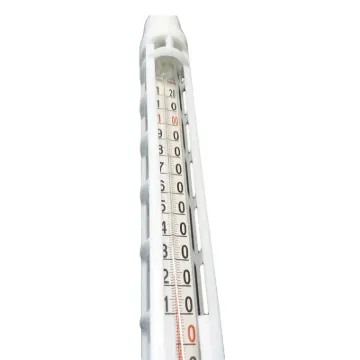
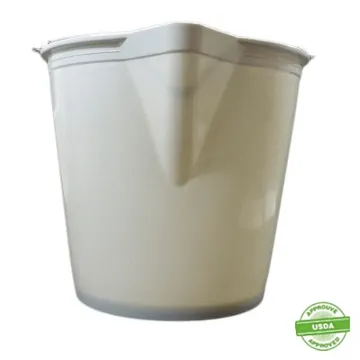
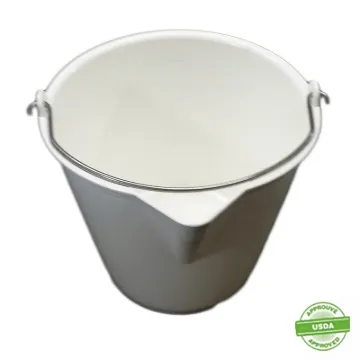
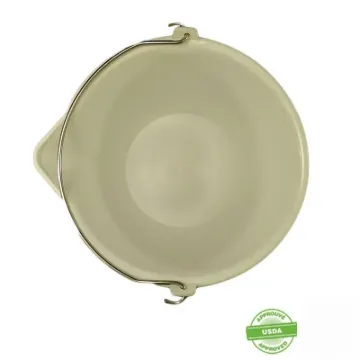
17L pail with pouring spout graduated
The compliant graduated food-grade spouted bucket with a stainless steel handle is designed for transporting liquids, food products, and a variety of ingredients.
The wear band on the bottom protects the base of the bucket, provides enhanced stability, and ensures a secure grip when pouring.
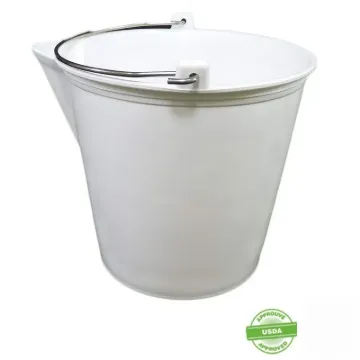
13L pail with pouring spout graduated
The compliant graduated food-grade spouted bucket with a stainless steel handle is designed for transporting liquids, food products, and a variety of ingredients.
The wear band on the bottom protects the base of the bucket, provides enhanced stability, and ensures a secure grip when pouring.
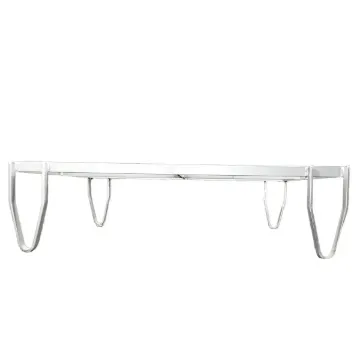
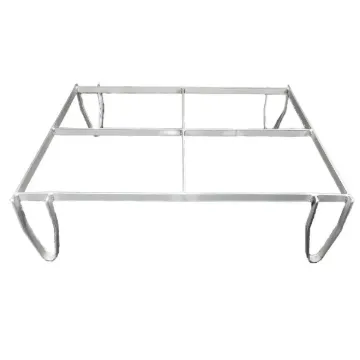
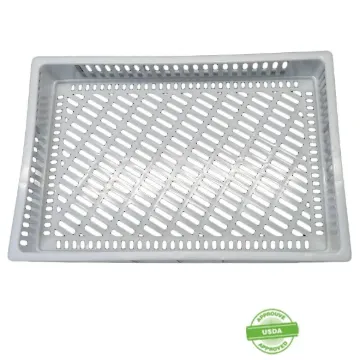
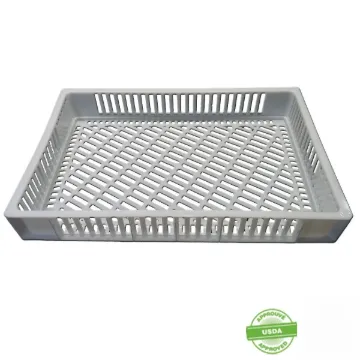
Basket container 600 x 400 x 90 mm, 15 L
Perforated crate.
Designed to store delicate foodstuffs.
Perforated base and walls.
Build with side supports.
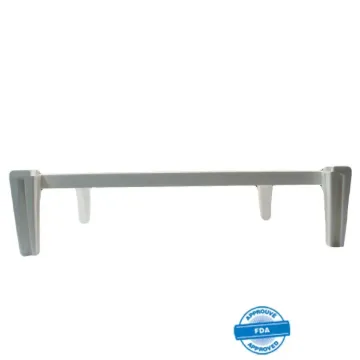
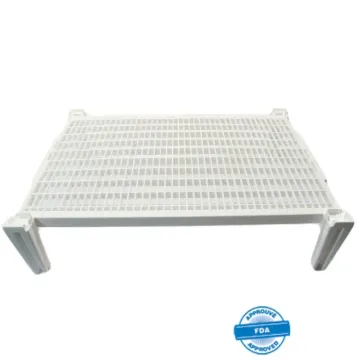
Plastic aging rack 745 x 505 mm, H180/160 mm
Robust rack adapted to heavy loads
Plastic racks are light and sturdy, suitable for pressed cheese.
Our plastic aging racks are used for ripening, brining and drying cheeses allowing an optimal ventilation and support of the products.
The choice of rack height should be done according to the cheese size.
They stack legs on legs to create shelves where the cheeses can be placed.
This modular solution will optimize the space in the room allowing an even result and an easy manipulation.
It suits well for semi-hard to hard cheeses and blue cheeses.
Made in injected food-grade polypropylene, they are heavy duty and can be stack with a lot of weight on at more than 2 meters.
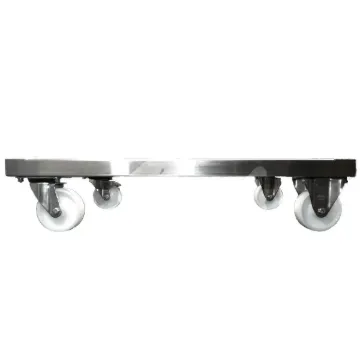
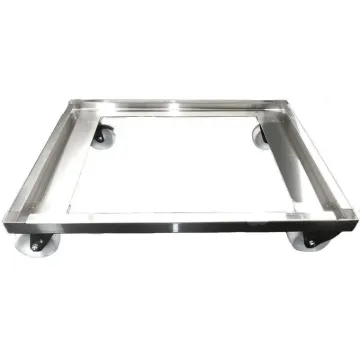
Base on wheels for ripening rack 760 x 580mm and 750 x 510mm - 4 in. wheels
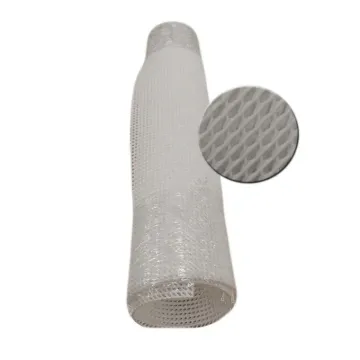
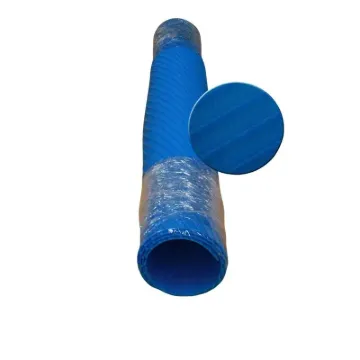
Ripening mat diagonal 50 cm x 1 m
Mats for covering racks
Covering racks with mats helps minimize the marking of delicate cheeses.
Ripening mat straw type 69 cm x 1 m
Mats for covering racks
Covering racks with mats helps minimize the marking of delicate cheeses.